
Nirji Semicon logo

Hire Packaging Technicians in India

Packaging technicians keep the back end of an OSAT or ATMP line moving: they run the tools that protect, mark and finish every chip before it is tested and shipped. Nirji Semicon builds packaging technician teams for Indian plants, prepared on your process and certified to the Nirji Ready standard before they reach your floor.

What a Packaging Technician does on the line

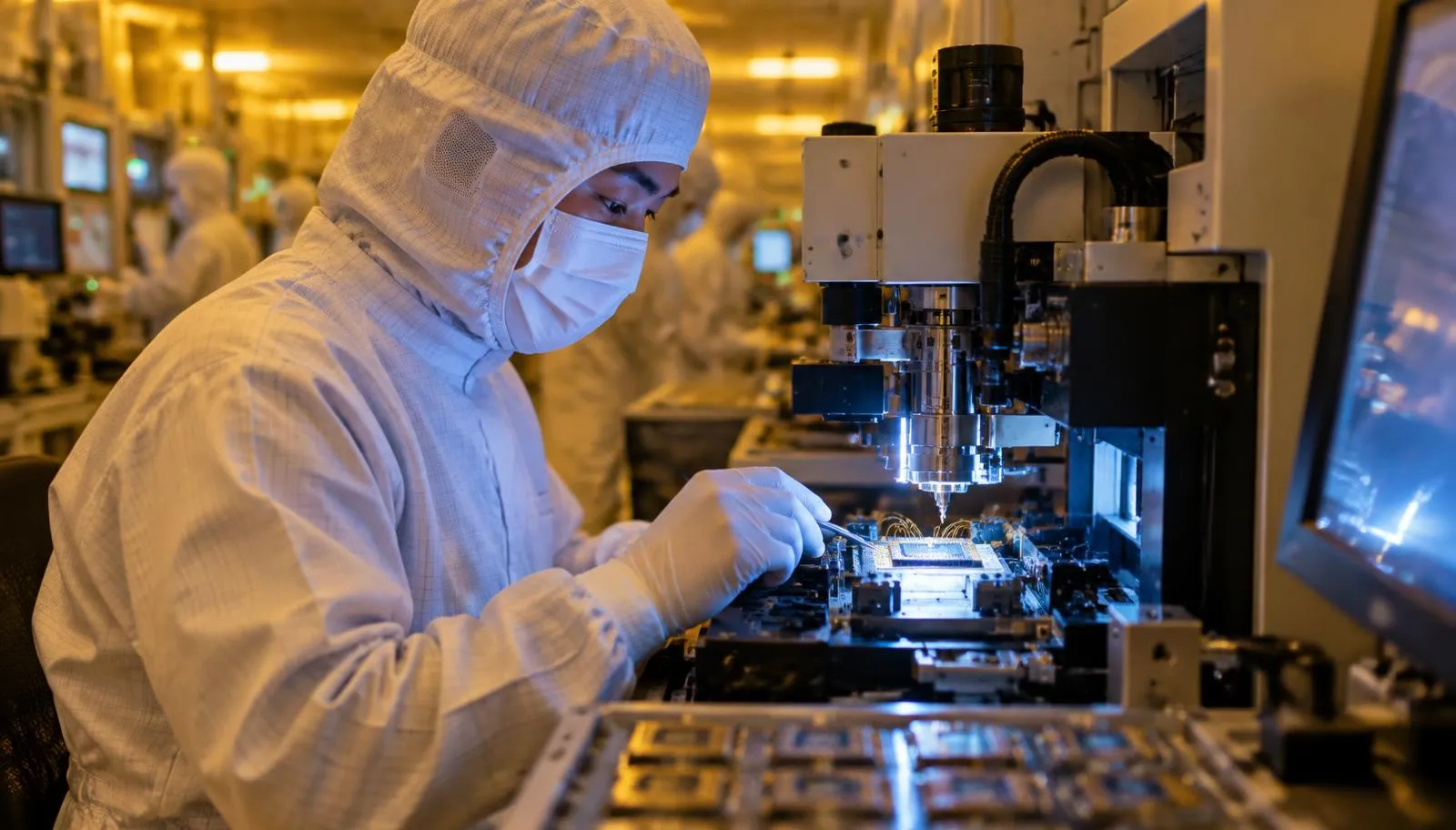
Once a die has been attached and bonded, it is still fragile. The packaging technician's job is to turn that assembly into a robust, finished component. On a typical OSAT or ATMP line, that means running and monitoring moulding presses that encapsulate the die, post-mould cure ovens, deflash and plating steps, laser marking, trim and form, and singulation. On substrate-based packages the work extends to ball attach, reflow and saw singulation.

The role is hands-on and highly procedural. A packaging technician sets up tools for each product, loads and unloads strips and magazines, checks the first pieces off each run, and keeps the tool within its process window through the shift. They read and follow standard operating procedures, record results in the manufacturing execution system, and raise the alarm the moment something drifts, whether that is incomplete fill, voids, wire sweep, mis-marking, or dimensional issues after trim and form.

Good packaging technicians also protect yield in quieter ways. They handle material to strict ESD and cleanliness rules, manage mould compound and consumables by lot and shelf life, carry out routine cleaning and first-level maintenance, and make clean handovers at shift change. When a problem goes beyond first-level troubleshooting, they give equipment and process engineers the precise information they need to fix it quickly.

Because the packaging steps sit between assembly and test, a weak packaging team shows up immediately as scrap, rework and delayed shipments. A strong one is one of the biggest levers a new Indian plant has on output and quality in its first year.
Key competencies, mapped to Workforce Architecture levels

Levels follow the Nirji Workforce Architecture: L1 supervised, L2 independent, L3 advanced and troubleshooting, L4 expert and coaching.

L1
  • Safe, clean operation

    Follows ESD, cleanroom and EHS rules without reminders; handles strips, magazines and consumables correctly; runs a set-up tool under supervision.

  • Procedure and records discipline

    Works strictly to SOPs, records lot, tool and inspection data in the MES, and escalates anything outside specification.

L2
  • Independent tool operation

    Sets up mould, cure, marking and trim and form tools for a product change, runs first-piece checks and keeps the tool in its process window across a shift.

  • Visual and dimensional inspection

    Recognises common packaging defects such as incomplete fill, voids, flash, mis-marks and lead damage, and uses gauges and microscopes to confirm them.

L3
  • First-level troubleshooting

    Traces defects to likely causes, adjusts within approved limits, carries out routine preventive maintenance and gives engineers clear data when escalating.

  • SPC and yield awareness

    Reads control charts for key packaging parameters, spots trends before they become excursions, and contributes to containment and corrective actions.

L4
  • Line coaching and standards

    Trains new technicians on the floor, helps write and improve SOPs and one-point lessons, and leads a packaging area through audits and new product introductions.

Equipment and tools

  • Transfer moulding presses and mould chase cleaning
  • Post-mould cure ovens
  • Deflash and plating equipment
  • Laser marking systems
  • Trim and form systems
  • Ball attach and reflow (substrate packages)
  • Saw and punch singulation
  • Optical inspection microscopes and dimensional gauges
  • MES terminals and lot tracking
  • ESD control and cleanroom garments

How Nirji builds this workforce

  1. 01

    Workforce architecture

  2. 02

    Client-defined programme

  3. 03

    Nirji Ready assessment

  4. 04

    Deployment, 30/90-day check

We start with the Nirji Workforce Architecture for the packaging area of your line: how many technicians you need at each level, on which tools and shifts, and when. That becomes the specification for the team rather than a generic job description.

Candidates, usually ITI and diploma holders in electronics, electrical, mechanical or mechatronics trades, are then prepared through a client-defined workforce programme with a delivery partner. The foundation layer covers semiconductor basics, ESD, cleanroom discipline, EHS, SPC and shift readiness. The role layer covers moulding, curing, marking, trim and form and inspection. The employer layer uses your packages, SOPs, MES screens and quality standards wherever you can share them.

Before deployment, every candidate is assessed for Nirji Ready certification at the level the role requires. Where you need experienced hands from day one, we can mobilise seasoned packaging technicians and leads from established hubs to run the area while local teams are built behind them. After deployment we check performance at 30 and 90 days and feed what we learn back into the next cohort.

Mobilise · Manufacture · Deploy

Frequently asked questions

Most come from ITI or diploma backgrounds in electronics, electrical, mechanical or mechatronics trades. Semiconductor-specific skills are built through a client-defined workforce programme before deployment.

Insights on this role

Plan your Packaging Technician workforce with a Workforce Diagnostic.