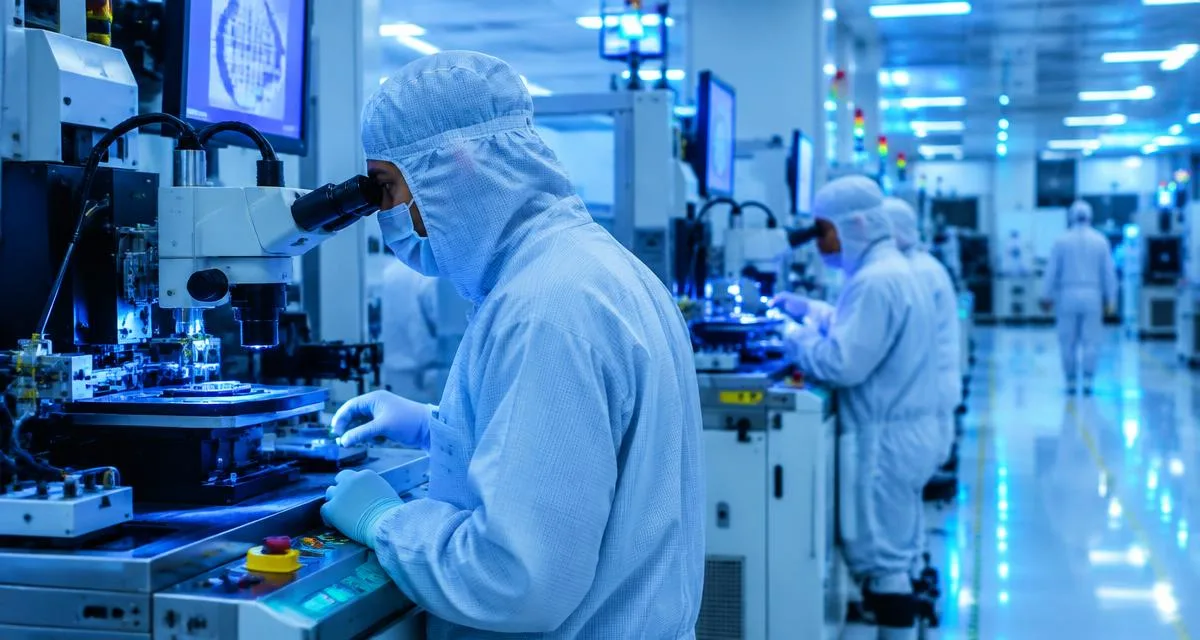
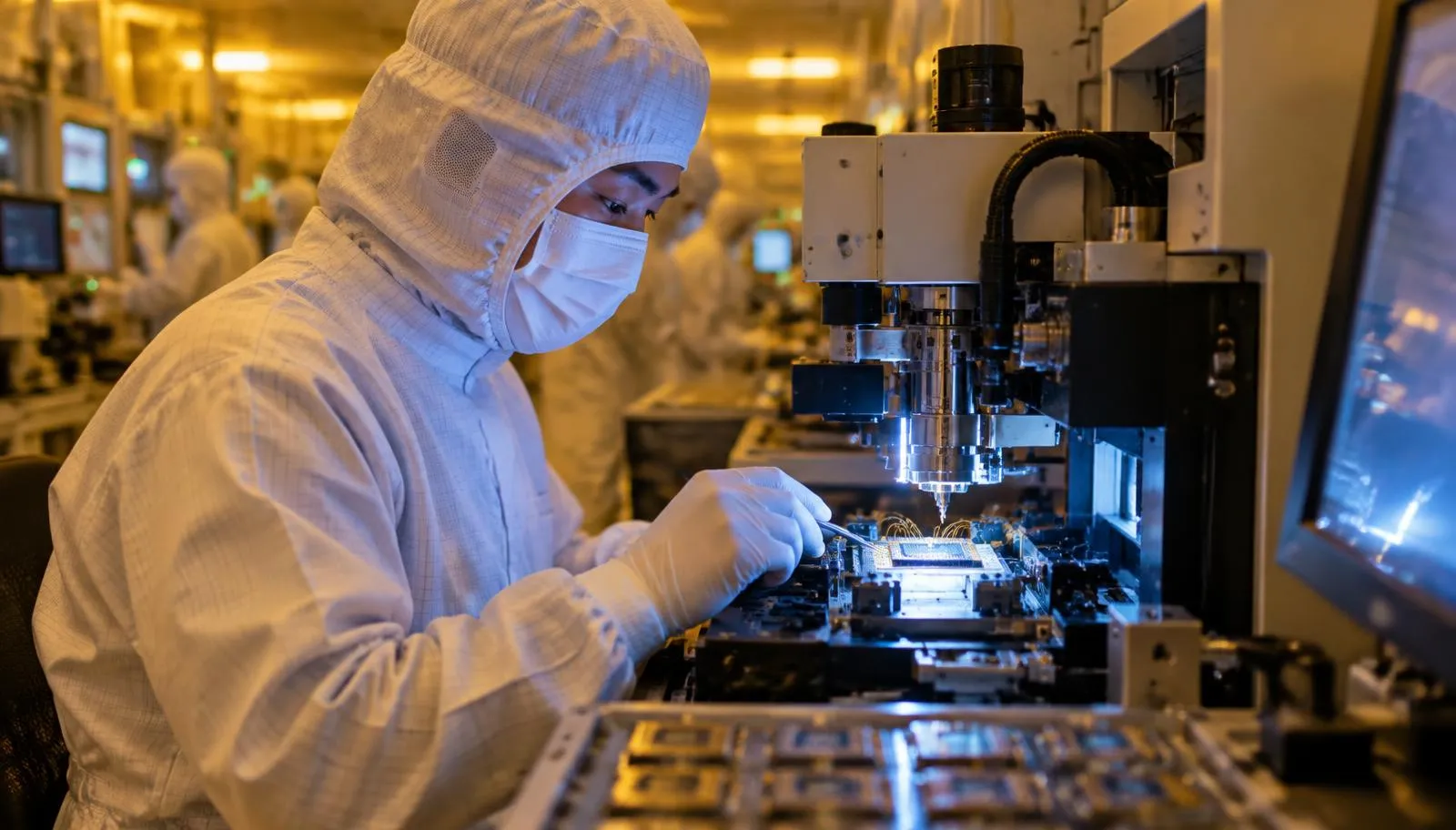
India's semiconductor build-out has moved from approvals to production. Twelve projects were approved under the first phase of the India Semiconductor Mission, several are already producing, and Semicon 2.0, approved in July 2026 with an outlay of Rs 1,27,500 crore, widens support across design, equipment and materials, fabs, advanced packaging and research.
Plants can be financed and built on schedule. The people to run them cannot be produced as quickly. That gap is the biggest risk to India's semiconductor timelines, and also one of its biggest opportunities.
What is the semiconductor talent gap in India?
The semiconductor talent gap is the difference between the workforce India's new plants need and the workforce that is ready to work on a live production line today.
India has a large base of engineering graduates and a deep pool of chip design engineers. The gap sits elsewhere:
| Where the gap is | What it looks like on the ground |
|---|
| Production readiness | Graduates who know theory but have not worked in a cleanroom, followed ESD discipline or run production equipment |
| Manufacturing, packaging and test | A thin talent base for OSAT, ATMP and fab roles compared with design |
| Experienced leaders | Few professionals in India who have started up and stabilised a semiconductor line |
| Equipment and service | Shortage of installation, hook-up and field service engineers as tools arrive |
| Trainers and facilities | Limited trainers with plant experience, and limited access to real tools or simulators |
| A common standard | Certificates that prove attendance, not ability, so employers re-train every hire |
Why does the talent gap matter for semiconductor projects?
Workforce problems show up as project problems: delayed start of production, slow ramp-up, lower yield, more equipment downtime and high early attrition. In semiconductors, a line that cannot be staffed is a line that cannot earn.
The workforce also matters before a plant is built. Applicants to the India Semiconductor Mission are evaluated on parameters that include project implementation capacity and operation capability. A credible plan for who will build, start and run the plant strengthens that case.
What opportunities does the gap create?
- For semiconductor companies: a chance to build a loyal, India-based workforce early, ahead of competitors, before experienced talent becomes scarcer.
- For engineers and technicians: long-term careers in a strategic, high-technology industry, from operator to process engineer to line leader.
- For experienced global professionals, including Indians working in semiconductor hubs abroad: senior roles in India's new plants and the chance to build teams from the ground up.
- For institutes: industry-linked programmes and a direct route from campus to cleanroom for their students.
- For states: a ready workforce that helps attract semiconductor investment.
Which semiconductor skills are most in demand in India?
| Function | Skills in demand |
|---|
| OSAT and ATMP | Wafer dicing, die attach, wire bonding, flip-chip, molding, marking, test handling, wafer-level and advanced packaging |
| Test and qualification | ATE test programming, wafer sort, probe card and load board, characterization, burn-in, reliability qualification |
| Wafer fab | Photolithography, etch, CVD/PVD/ALD, CMP, ion implantation, metrology, yield engineering, process integration |
| Equipment and facilities | Tool installation and hook-up, preventive maintenance, vacuum and RF systems, wafer handling robotics, UPW, gases, HVAC |
| Quality and operations | SPC, FMEA, 8D, Six Sigma, JEDEC and ESD standards, MES, shift supervision |
| Chip design | RTL design, Verilog/SystemVerilog, UVM verification, physical design, STA, DFT, analog and mixed-signal |
| Programming and data | Python, Tcl, Perl, C/C++, Linux, SECS/GEM, factory automation, yield analytics, machine learning |
| Production behaviours | Cleanroom discipline, safety, documentation, shift readiness, working to SOPs |
How Nirji Semicon is closing the semiconductor talent gap
Nirji Semicon is a semiconductor workforce infrastructure company. We define the workforce a project needs, then build it through three engines:
- Mobilise. Experienced semiconductor professionals from global hubs, brought to India to start and stabilise lines and to coach local teams.
- Manufacture. India's own workforce, built at scale through client-defined programmes with qualified institutes and partners, and assessed for Nirji Ready certification, which certifies demonstrated readiness, not course completion.
- Deploy. Certified talent placed on the line through direct hire or a managed workforce, with performance checked at 30 and 90 days.
How Nirji Semicon supports a semiconductor project, stage by stage
We can partner with a project at any stage, and ideally from the very beginning.
- Application stage. We prepare a role-by-role workforce plan, covering roles, volumes, sourcing, training and timelines, that supports the project's application and investment case, including to the India Semiconductor Mission.
- Planning. We turn the plan into a workforce architecture: competencies, proficiency levels, a hiring roadmap and training programmes tied to the construction and ramp schedule.
- Construction and tool installation. We mobilise installation, hook-up, facilities and EHS talent as tools arrive.
- Line start-up. A Line Start-Up Team of experienced global professionals, paired with local hires for knowledge transfer from day one.
- Ramp-up. Ramp-Up Cohorts of local talent, trained to the plant's roles and certified Nirji Ready.
- Steady-state operations. A managed workforce, backfill and shift supervision, with performance and retention tracked.
- Sustain and grow. Upskilling for new packages, processes and tools, and gradual localisation of mobilised roles.
Engagement models
| Model | Best when | What you get |
|---|
| Workforce diagnostic and plan | You are preparing an application, investment case or new line | A role-by-role workforce plan with volumes, timelines and sourcing |
| Line Start-Up Team | You need experienced people to start production | Mobilised experts plus local hires, with knowledge transfer built in |
| Ramp-Up Cohort | You need trained people at volume | A 100 to 250 person cohort trained and certified against your roles |
| Direct hire | You want permanent employees | Assessed, Nirji Ready candidates matched to your roles |
| Managed workforce | You want flexibility and one accountable partner | A deployed team we manage against agreed performance measures |
| Build-operate-transfer | You want a team built and run before you take it over | A complete function, built, stabilised and handed over |
| Global talent mobility | You need experienced talent now | Professionals mobilised to India with visa, relocation and employer-of-record support |
Global mobilisation and borderless talent solutions
India's first plants cannot wait for the local talent pool to mature, and they do not have to. Borderless talent means using the best available talent regardless of where it sits today:
- Global mobilisation: experienced OSAT, ATMP, fab and equipment professionals from global semiconductor hubs, relocated to India for start-up and leadership roles.
- Returning talent: Indian semiconductor professionals abroad who want to bring their experience home.
- Rotational and short-term experts: specialists for tool installation, process qualification or new product introduction, deployed for defined periods.
- Employer-of-record: we employ and manage mobilised talent in India, so you can start before setting up local HR processes.
- Knowledge transfer by design: every mobilised role carries the responsibility to train local teams, so dependence on expatriate talent falls over time.
The goal is not permanent reliance on global talent. It is to start on time with global experience, then build an Indian workforce that can run and grow the plant.
Build your semiconductor workforce with Nirji Semicon
You define the workforce. We build it.
- Semiconductor companies and new projects: Request a Workforce Diagnostic (/request-diagnostic)
- Lines starting up: Explore the Line Start-Up Team (/offers/line-start-up-team)
- Global talent: Mobilise experienced talent (/request-diagnostic?segment=mobility)
- Equipment OEMs: Request a Field Service Workforce Plan (/request-diagnostic?segment=equipment)
- Experienced professionals: Register for India opportunities (/global-talent)